OneRoom Health Named Most Notable Exhibitor at AMGA 2026 Annual Conference
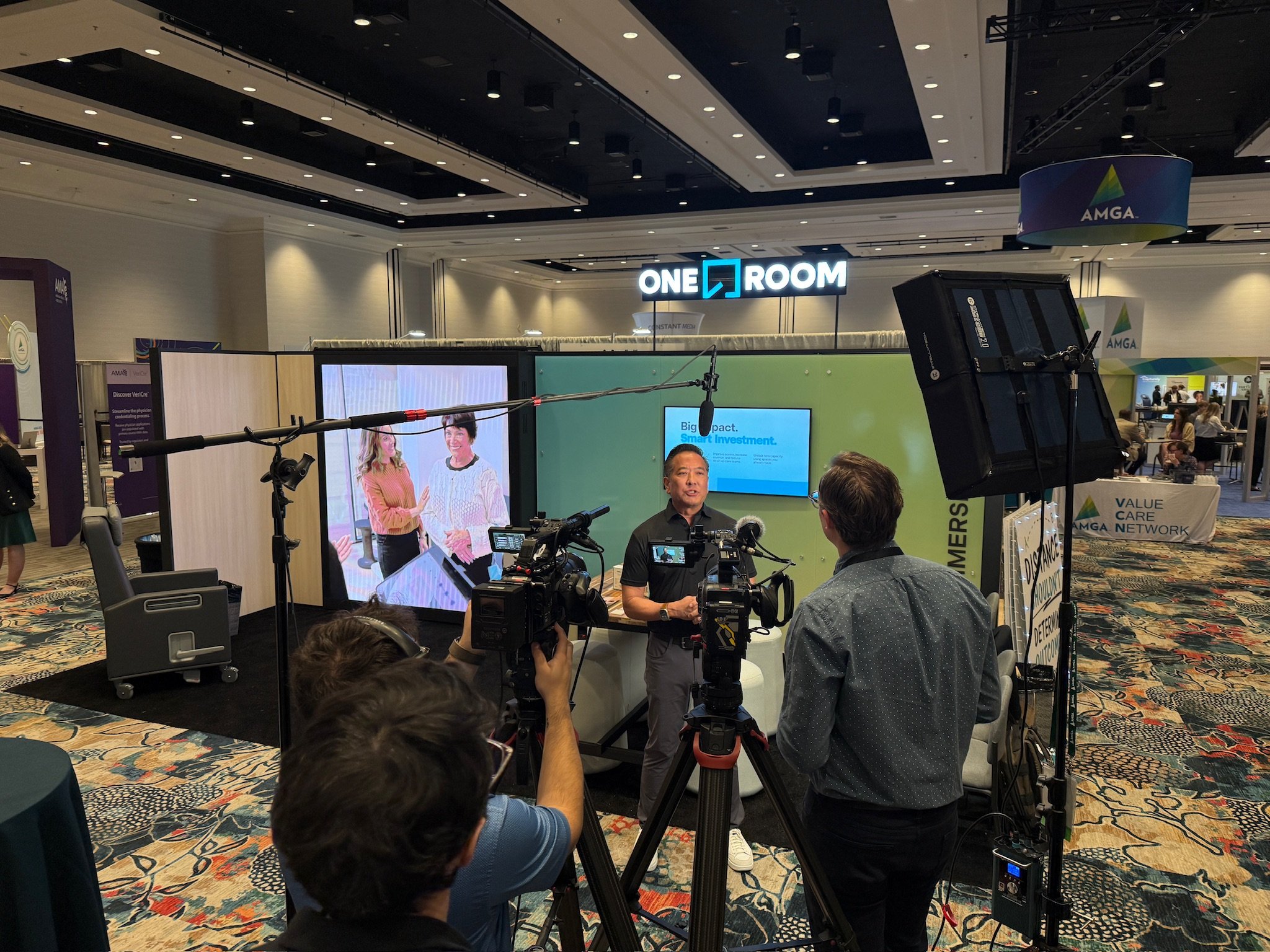
CEO and Co-Founder, Dr. Kurt Tamaru interview with press team at AMGA about OneRoom Health’s Immersive Care technology for multi-site or rural health systems facing challenges with access.
The AMGA Annual Conference brings together more than a thousand of the country's leading medical group and health system executives each year. This April in Las Vegas, between keynotes from Mark Cuban and a closing night with Penn & Teller, one company on the exhibitor floor generated more conversation than any other.
OneRoom Health was voted Most Notable Exhibitor at the 2026 AMGA Annual Conference by attendees, recognized from a field of established health technology companies, medical device makers, and clinical services platforms. The vote came from the health system leaders walking the floor: hospital executives, clinical directors, and physicians who spend their careers trying to solve problems that have not yet been solved.
A grand entrance that started the conversation

President and Co-Founder, Kurt Brenkus dressed as Elvis for AMGA Exhibitor entrance.
AMGA invited exhibitors to make a grand entrance into the exhibit hall, and the OneRoom team took the assignment seriously. Co-Founder and President Kurt Brenkus walked the floor in a full Elvis costume, waving a poster board with a message that resonated with every health system leader in the room: "Telemedicine has plateaued." Behind him, the rest of the OneRoom team followed with a second poster: "So we built something else."
It was theatrical but it was also true. The entrance generated curiosity, drew a crowd, and set the tone for the conversations that followed. Attendees came to the booth wanting to know what comes after telemedicine, and they left with a clear answer.
The recognition did not stop there. AMGA sent a professional film crew to the OneRoom booth to interview CEO and Co-Founder Kurt Tamaru, MD. The conversation covered the realities of healthcare access, the limits of conventional telemedicine, and what a fundamentally different care model looks like in practice.
A conversation that kept coming back to specialty access
The excitement at the conference reflected something larger happening in healthcare right now. Across the country, health systems are wrestling with the same structural challenge: how to extend specialty care from a hub location to remote spoke clinics that need it most. Most health systems already have the specialists. What they do not have is a way to connect those specialists to patients in remote and rural communities without asking those patients to travel hours for a single appointment.
Travel is a burden. It is also a barrier to care. Patients miss appointments, delay diagnoses, and sometimes go without specialty care entirely. For health systems, the cost shows up as referral leakage, fragmented care, and underutilized clinical capacity.
This is the problem OneRoom was built to solve. Immersive Care extends specialty services from urban hub centers to rural and remote spoke clinics, allowing health systems to keep care local and add specialty service lines they may not currently offer. At AMGA, that message resonated. Health system leaders stopped at the booth not to learn about another telemedicine platform, but to see what specialty access looks like when clinical presence is restored across distance.
Technology designed around the patient and provider
What attendees noticed most was how the technology felt. OneRoom is built around the patient and the provider, not the other way around. The platform incorporates ambient intelligence to support clinical workflows, but the design philosophy is firm: technology should never replace clinical judgment. The role of the system is to remove friction, surface the right information at the right moment, and free clinicians to do what only they can do.
That commitment to preserving the human connection between patient and provider is what separates Immersive Care from conventional telemedicine. Video alone flattens the encounter. OneRoom restores presence, trust, and the kind of clinical confidence that real medicine requires.
A foundation built in the hardest-to-reach communities
OneRoom did not start in a boardroom. The company's roots run through some of the most underserved care environments in the country. Co-Founder and President Kurt Brenkus previously founded companies serving rural and Tribal health markets, including work through sister company Indigenous Pact that has helped expand access at health centers across Indian Country. That experience shaped the conviction behind OneRoom Health: if a care model can work in the most remote corners of America, it can work anywhere.
That foundation matters. Many of the systems looking for specialty access solutions today serve Critical Access Hospitals, FQHCs, Tribal clinics, and rural communities where the gap is widest. OneRoom's platform was designed with those realities in mind from day one.
Recognition from the broader healthcare industry
The AMGA recognition is one of several recent milestones for the company. Brad Smith, Vice Chair and President of Microsoft, publicly spotlighted OneRoom Health in a conversation about health innovation. Dr. Ashok Rai, President and CEO of Prevea Health and former AMGA Board Chairman, has called Immersive Care one of the most promising approaches he has seen for closing the rural specialty access gap at scale.
Las Vegas was a validation.
The work continues.
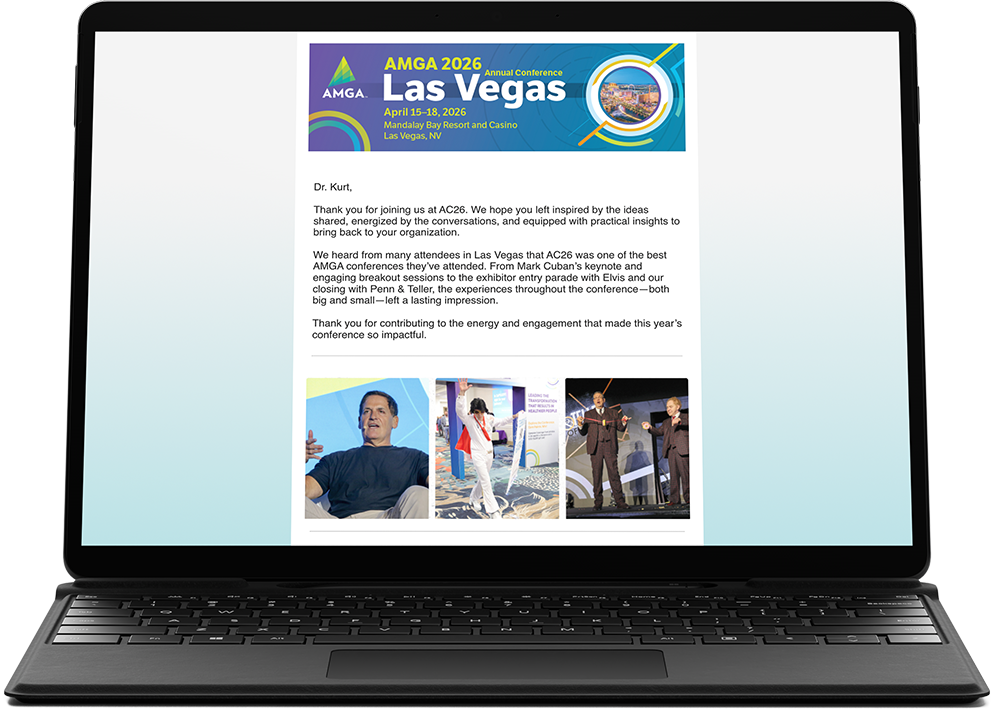
President and Co-Founder, Kurt Brenkus featured on AMGA’s follow-up email alongside Mark Cuban (keynote speaker) and Penn & Teller (Closing act).