Why Regional Partnerships Are Winning Rural Health Transformation Funding
Across the country, states are moving from award to implementation under the $50 billion Rural Health Transformation (RHT) Program, and a clear pattern is emerging in the initiatives gaining real traction: they're built on regional partnerships, not solutions confined to a single system. Having spent the past several months working alongside health systems and state partners on RHT-aligned strategy, we've seen this play out directly, and it's reshaping how systems should think about their next move.
A Program Built Around Collaboration
The Rural Health Transformation Program, authorized under the One Big Beautiful Bill Act, allocates $50 billion over fiscal years 2026 through 2030 to help states strengthen rural health systems (CMS). All 50 states have now received approved awards, and states are in the process of directing that funding toward local initiatives, sub-awards, and provider partnerships across their rural regions.
CMS built collaboration into the program's foundation. Its "Sustainable Access" strategic goal explicitly calls for rural facilities to work together, or with high-quality regional systems, to share and coordinate operations, technology, and care (CMS). States are directed to prioritize initiatives that strengthen these regional relationships, not projects that treat a single hospital or system as an island.
Why Regional Access Matters Right Now
The urgency behind this shift is measurable. HRSA's most recent physician workforce projections estimate that by 2038, physician supply in nonmetro areas will meet only 42 percent of demand, a 58 percent shortage, compared to a 5 percent shortage in metro areas (HRSA, December 2025). For patients, that shortage isn't abstract. In many remote communities, a health system may have no specialty access on site at all, meaning every referral means a drive of hours to reach a specialist. For a patient managing transportation limits, work schedules, or a condition that makes travel difficult, that distance can be the difference between getting care and going without it.
Where OneRoom Fits
We've seen this gap closed firsthand. In two recent examples from our own work, a rural health system with no on-site specialty access was paired with a larger metro health system that had specialty capacity to spare, in one case across state lines. Rather than referring patients hours away for a single appointment, the rural system now connects patients directly to specialists at the partner system, often for a same or next-day visit, all without the patient leaving their primary point of care. The benefit runs both ways: the rural system gains specialty access it couldn't support on its own, and the metro system fills more appointments for the specialists it already employs. We've also seen this model work within a single health system, connecting a rural facility to its own hub location hours away, using the same shared infrastructure to close the distance.
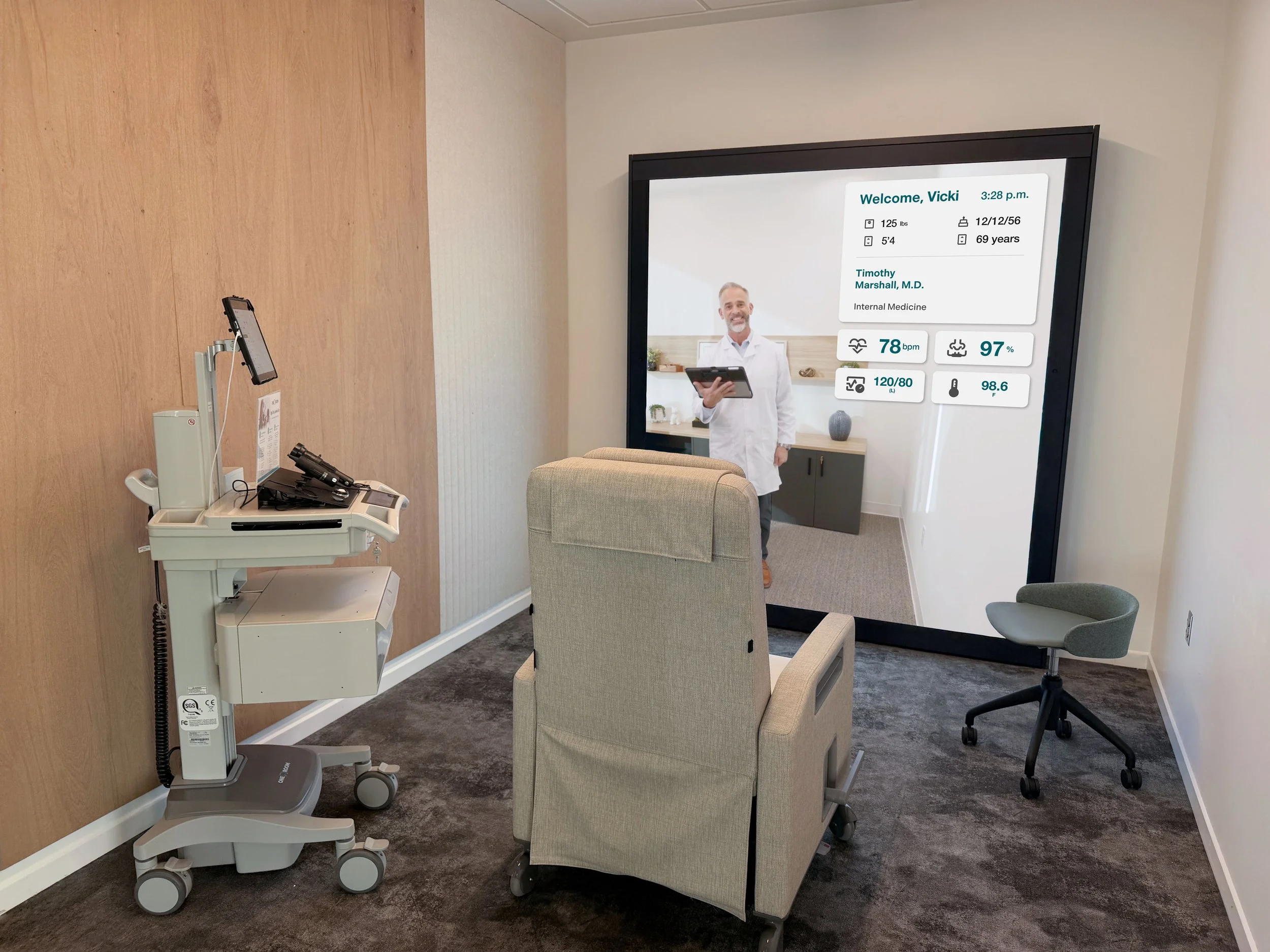
That's what a regional partnership looks like in practice, and it's exactly what OneRoom's CareRoom platform is built for. Running on OneRoom OS™ and streaming Integrated Medical Devices, a CareRoom brings the specialist into the exam room through an Immersive Care™ experience that restores real clinical presence across distance, no matter which side of the partnership each provider sits on. For a state or a regional health network, that means one shared clinical infrastructure can extend specialty access to multiple communities at once, rather than each facility solving the same problem alone. It's work that sits directly at the intersection of where RHT policy is headed and the technology built to meet it.
What This Means for Your Strategy
If your system or state is thinking through how a regional partnership could strengthen an RHT-funded initiative, the window to act is now, states are actively building out their implementation plans. Reach out to our team and we're glad to walk through what we've learned working alongside systems on this across the country.