


The Future Is Hybrid: Immersive Care at Scale
Healthcare delivery is moving toward a distributed model. Over the next decade, hospitals and health systems will increasingly anchor networks of connected care sites rather than concentrate services within a single physical campus.
The challenge is that most hybrid care infrastructure still connects people through video rather than connecting clinical environments. Immersive Care takes a different approach by linking exam rooms, clinicians, and diagnostic tools into a unified network, allowing health systems to deliver consistent, high-quality care across distance.

The Exam Room Is a Clinical Tool
The exam room has remained largely unchanged for decades. A table, fluorescent lighting, and a monitor placed wherever space allows. While these limitations were once accepted as part of clinical practice, they create significant barriers when care is delivered remotely.
Immersive Care begins with a different premise. The clinical environment itself shapes how patients communicate, how clinicians observe, and how confidently decisions are made. The CareRoom was designed to restore the conditions that support high-quality care by transforming the exam room into a purpose-built clinical system rather than a passive backdrop.
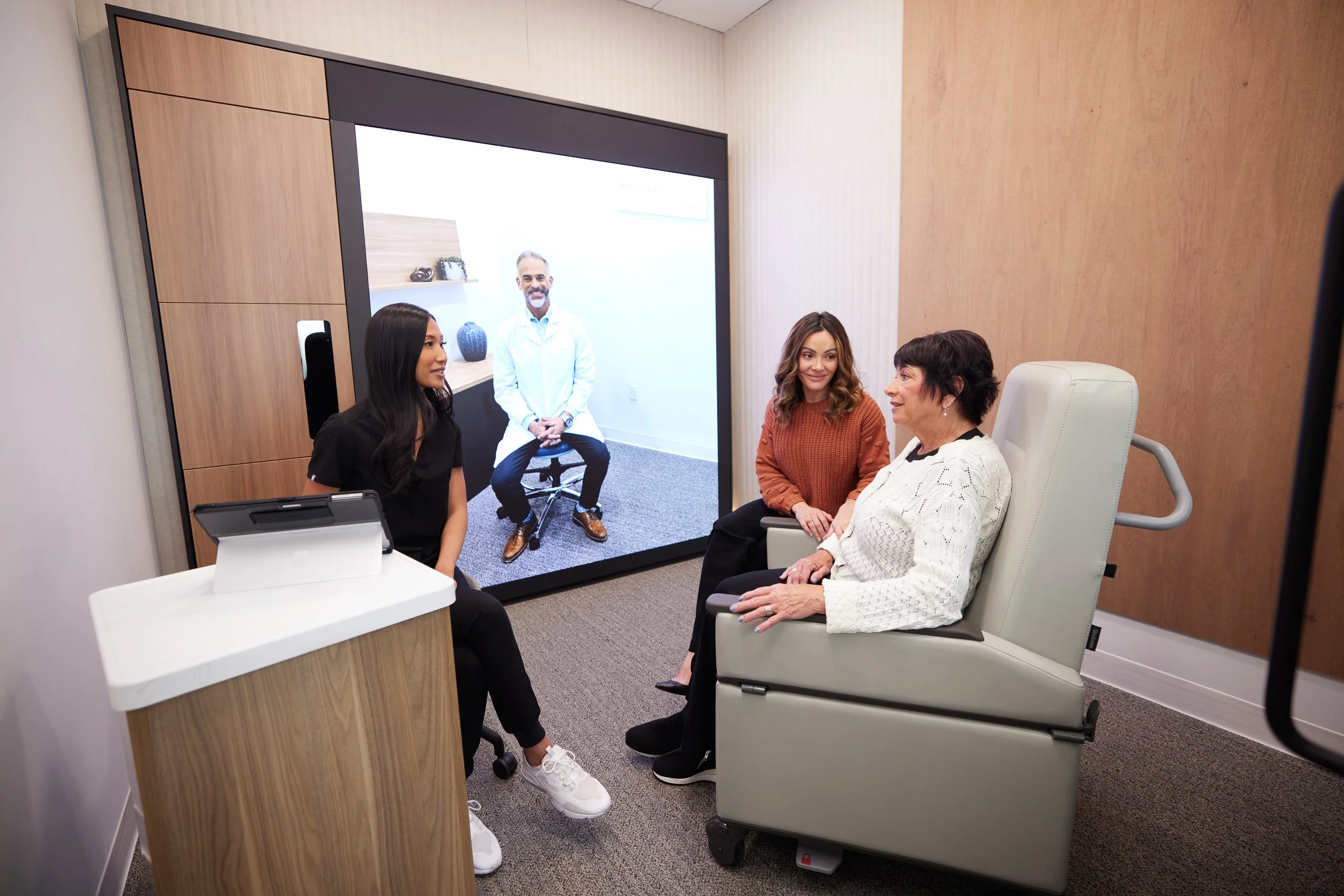
The Anatomy of the CareWall
At first glance, the CareWall can look like a premium display for video visits. In reality, it serves a very different purpose. The CareWall transforms a standard exam room into a shared clinical environment where a remote specialist, onsite clinical team, and patient can work together with the clarity and coordination that in-person care requires.
By combining life-size presence, spatial audio, integrated diagnostics, and unified workflows, the CareWall restores the conditions that make clinical encounters effective. It is not simply a better screen. It is the infrastructure that makes a remote room feel shared again.

How Immersive Care Strengthens the Healthcare Workforce
The healthcare workforce crisis is often framed as a shortage problem, but hiring alone cannot solve it. Physicians remain unevenly distributed across regions, administrative burdens consume clinical time, and burnout continues to threaten long-term workforce sustainability.
Immersive Care addresses this challenge by extending the reach of existing clinicians. Through shared clinical environments and integrated diagnostics, physicians can support more locations and more patients without sacrificing the quality of the encounter. The result is a model that expands access while making clinical practice more sustainable.

Enhancing the Patient-Doctor Conversation
The most important clinical instrument has always been the conversation between a clinician and a patient. Through that exchange, clinicians observe posture, hesitation, tone, and the subtle signals that shape diagnosis and care decisions.
Traditional telehealth preserved access, but it often weakened the quality of that conversation. Immersive Care restores it by creating a shared clinical environment where eye contact, diagnostic information, and human presence exist in the same space. When the conversation is preserved, trust, understanding, and clinical decision-making improve.